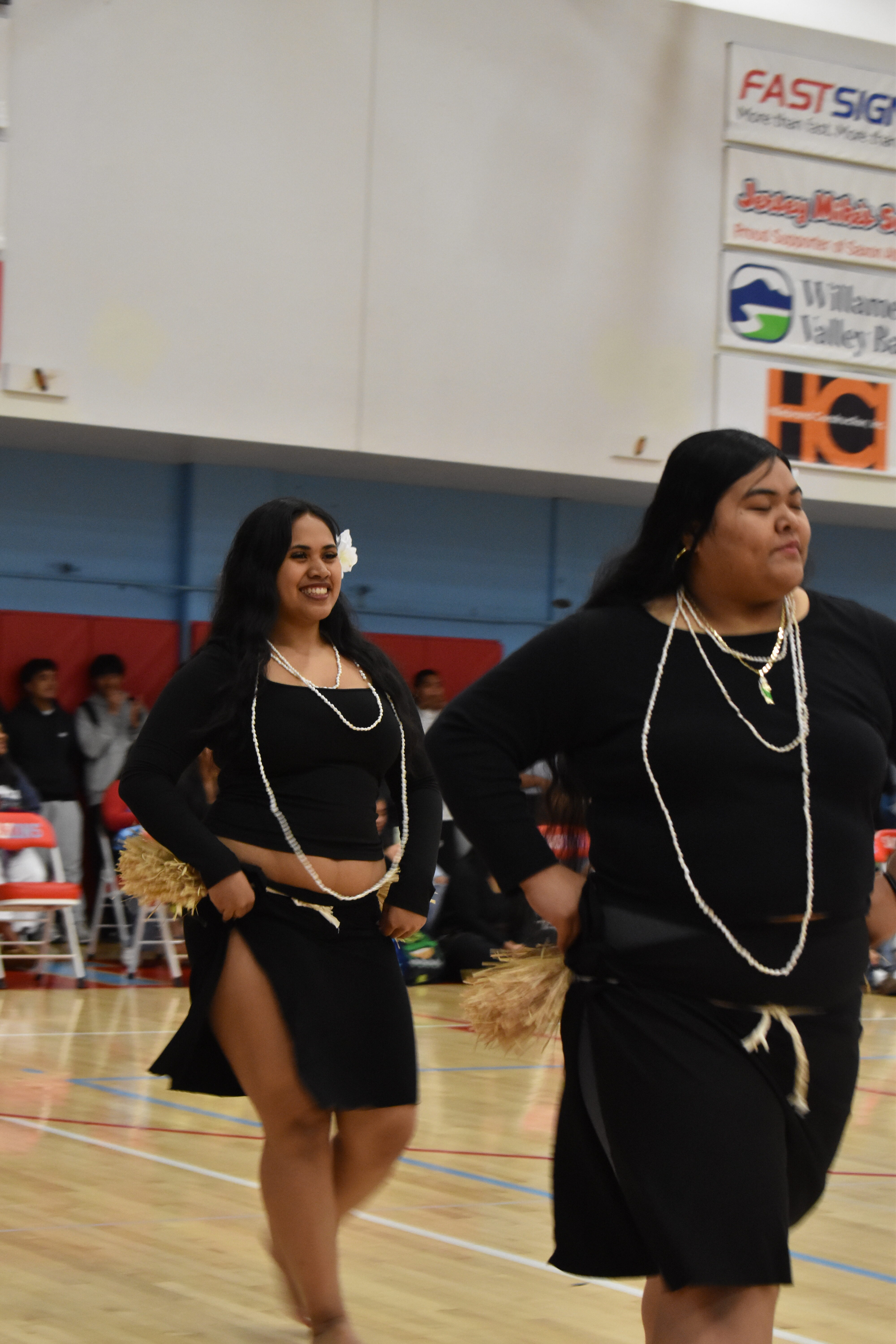
Over the years, students at South Salem High School have continued to look forward to the Multicultural Assembly. This assembly allows students to celebrate diversity and their unique cultural backgrounds. Various clubs and organizations within the school perform dances, inviting students to join and experience their culture.
Asian Club
This year, the Asian Club performed multiple traditional dances from varying Asian countries, such as the Philippines, Palestine and Turkey. One of the co-presidents of the club, Naya Basilan ‘26 shares that she loves the dance portion of the assemblies.
“My favorite part of the cultural assembly is getting to learn the different dances. I love getting to see how different cultures express themselves through dance and to learn about the techniques that make up each style of dance,” Basilan said. “I love the feeling of connection that these dances foster between me and my community and culture. It is a gift to be able to share our heritage and observe something so special to others.”

Since the Asian Club is representing some new countries this year, it invites the audience to learn something new about various cultures. The club performed “Tinikling,” a traditional Filipino dance, commonly performed in times of celebration to commemorate the overcoming of hardships. The club also branched out this year to represent Middle Eastern countries. They performed “Dabke,”originating from Palestine, Lebanon, Jordan and Syria. They also performed “Halay,” a dance originating from Turkey. Asian club’s dances all represent celebration, which the audience revive as the dancers share their culture.
“While stylistically different, many of the dances emphasize community, celebration and empowerment, and it is exciting to see the ways those themes are executed in these performances,” said Basilan.
Pacific Saxons
Along with the Asian Club’s performance, the Pacific Saxons performed cultural dances. A member of the club, Gabriella Menke ‘26 represents the islands of Samoa. She attributes the importance of the assembly to represent the islands moving as one in a community.

“I think it is important to share culture because it creates a more inclusive society, especially as Pacific Islanders, we feel unacknowledged. But when we learn from other cultures, we can also find similar values between our cultures and other cultures, and that is a way in which we can be united,” Menke said.
Importance of the Culture Assembly
Overall, the significance of the assembly is rooted in the fact that culture finds a way to positively bring everyone together, by finding elation in different perspectives and finding connection over unique traits.
“While many cultures have vastly different food, music, art and ways of life, each culture has traditions around such things that express our nature and how we respond to the world around us. We all celebrate, mourn, laugh, cry and persist against hardship. Ultimately, sharing culture helps us understand each other better, fostering new connections that build a more diverse and vibrant community,” Basilan said.